
Maduro’s regime has renounced his promise to run for office: Implications for Venezuela and the U.S.
After Venezuela signed an agreement to take steps to hold a fair presidential election, the sanctions were temporarily lifted. Instead, analysts say that President Nicolás Maduro’s regime has reneged on the deal by persecuting the political opposition.
The President of Venezuela is not pretending to play fair anymore. In October, he promised to take steps toward holding free elections, including allowing the opposition to pick a candidate in a primary process of its own choosing, with the lifting of some American sanctions as an incentive. But the ink was hardly dry before his government upheld a ban on running for office that had been placed on María Corina Machado, the overwhelming victor of that primary. Then it arrested her allies and campaign staffers, accusing them of an anti-government plot. Some people have sought refuge at the embassy of Argentina. The Maduro regime has even refused to register the candidate that Ms. Machado deputized to run in her stead.
The six-month oil embargo that was imposed by the US was lifted after an agreement was made with the opposition to make this summer’s presidential election more competitive. The deal included legal proceedings for re-stating banned presidential candidates like Mara Corina Machado.
“The list [of abuses] is so long,” says Ryan Berg, director of the Americas program at the Center for Strategic and International Studies in Washington. “I think you need some kind of reimposition of sanctions to show that there’s accountability.”
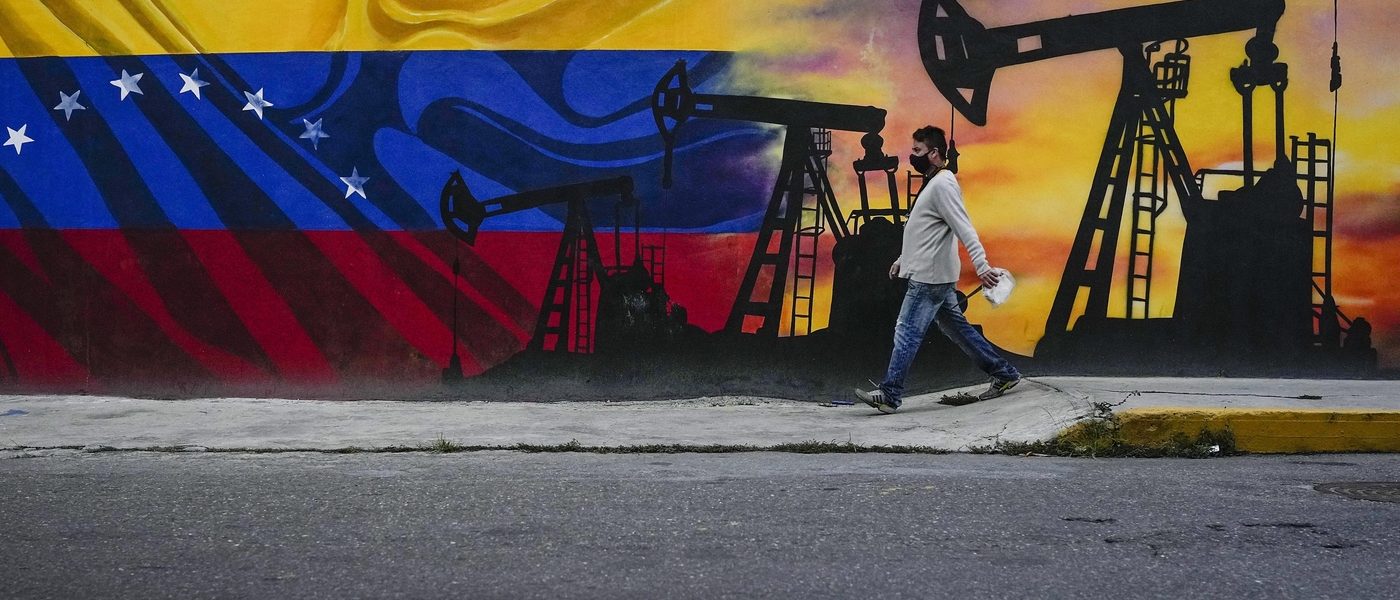
He may have also noticed that the sanctions haven’t turned out so well for the United States, either. Crushing sanctions on the country’s oil sector — designed by the Trump administration to shut down Venezuela’s economy and push Mr. Maduro out of power — are partly to blame for the migrant crisis at the U.S. border, a major political problem for Mr. Biden during an election year. The economic collapse of Venezuela was worsened by them. They curtailed investment in the country’s most important industry, curbed access to the hard currency needed to import food and medicine, and made it virtually impossible for Venezuela to refinance its debts.
The benefits were immediate for the regime. Last month, Venezuela’s oil exports hit a four-year high. But Eric Farnsworth, vice president of the Council of the Americas think tank in Washington, said the Biden administration moved too fast.
Although the Barbados accord led to the release of 10 Americans jailed in Venezuela and several Venezuelan political prisoners, Maduro continues to oppress his opponents and has expelled a U.N. human rights mission from Venezuela.
The Maduro government has barred Machado from holding public office for 15 years due to what legal experts call bogus charges of corruption and other alleged wrongdoing. Corina Yoris, a respected philosophy professor, will replace the opposition’s main presidential candidate. Yoris was not allowed to register.
Polls show that in a free election, the former right-wing congresswoman would beat the current president. The unpopular leader of Venezuela after 11 years, is deeply unpopular for leading the country into the worst economic crisis in its history.
Approximately 2% of the voting age Zimbabweans living outside of the country have been able to register to vote according to a Venezuela elections expert.
Francisco Rodríguez, a Venezuelan who teaches international studies at the University of Denver, says that for all of these reasons, the July 28 presidential election is shaping up to be “the most undemocratic election since Venezuela became a democracy in 1958.”