
Trump’s Trade War Has Arrived: Implications for U.S. Economy and the Role of Trade in China and the Middle East
President Trump’s sweeping tariff announcement Wednesday triggered a sharp drop in U.S. stock markets, a flashing-red warning sign of the economic fallout that’s expected to result from the widening trade war.
The market was in a nosedive around midday Thursday, with the DOW Jones Industrial Average falling over 1,200 points. The broader S&P 500 index sank 4% and the tech-heavy Nasdaq index dropped nearly 5%.
Trump argues that his new tariffs are simply designed to match the trade barriers that other countries impose on U.S. exports. But the White House acknowledged, it would be too hard to calculate the actual trade barriers in each foreign country. The officials just picked a number that would eliminate the trade surplus between the US and each country.
Economists warn the new taxes will result in higher prices and slower growth in the United States, while likely pushing many other countries into recession.
The tariffs amount to a nearly nine-fold increase in the prevailing U.S. import tax last year. Many investors were surprised by the size and scope of the levies announced after the stock market closed.
“This is a game-changing event not only for the US economy but for the global economy and you can throw most forecasts out the door if thistariff rate stays on for an extended period of time,” said Sonola in his research note.
Just as Trump tried to build a wall against illegal immigration during his first term in the White House, he’s now erecting an economic barrier against global trade, in an effort to restrict imports and encourage domestic manufacturing.
“We’re going to produce the cars and ships, chips, airplanes, minerals and medicines that we need right here in America,” Trump said Wednesday in the White House Rose Garden. If they don’t return, they’ll have to pay a big tax.
But while domestic manufacturers are supposed to be the beneficiaries of the trade war, many factories are bracing for higher costs and a loss of export markets. Trading partners have already promised to retaliate with tariffs of their own on U.S. exports.
“Here it comes, and we’re already seeing that,” said Tim Fiore, who conducts a monthly survey of factory managers. There are going to be a lot of ugly tariffs. It’s just going to kill demand.”
The U.S. launched a trade war in the 1930s. It didn’t work out well. The Great Depression is widely thought to have been worsened by the Smoot-Hawley tariffs.
“It was bad for consumers because they would pay more for it,” says Larry Summers, the former Treasury Secretary. “It was bad for producers, because it meant higher input costs. It undermined comity among nations, which was bad for peace.
It is not to say that all of Trump’s calculations arrive at the right answer. These are very rough calculation, and they are not easy to understand. Every trading partner, good and industry are the same as per the formula. Bananas, oil, clothing, computers or cars — it doesn’t matter what a country sends to the U.S.
Demand for Chinese products would be reduced if a 70% tariffs on Chinese products were implemented. The trade deficit is expected to be closed if the new tariffs reduce Americans’ spending on Chinese products by $294 billion. In theory at least.
This is different to Trump’s previous statements where he has denied that tariffs would raise prices or said that he couldn’t care less.
Behind these Greek letters there’s a blunt but understandable approach. Essentially, the equation is trying to answer the question: How high should we set tariffs in order to get Americans to buy fewer foreign products, and close the trade deficit? The higher the trade deficit is, the more the US should impose tariffs on other countries’ products.
That is not true. These are not reciprocal tariffs. They do not correspond to the tariff rates in other countries. The truth behind where these tariffs came from is far more interesting.
On Wednesday, when he announced his latest tariffs, President Donald Trump also sparked an economic mystery. How did those numbers come to be in the world?
Will Trump’s tariffs actually make a difference in the trade deficit? Maybe, maybe not. At last, the administration has shown its work. According to their calculations, closing the trade deficit and raising prices are what these tariffs are designed to do.
The recent gyrations in the stock market also may have rattled people’s nerves, leaving them less eager to spend. Since January, the S&P 500 has fallen more than 5%.
Personal spending was weaker than expected in February, according to the Commerce Department, with lower spending on discretionary services such as restaurant meals.
People across the political spectrum say they are worried about their finances, unemployment, and inflation due to the policies of the president on tariffs and job cuts. A survey by the University of Michigan found consumer sentiment fell in March for the third month in a row.
“I don’t see things moving in a positive direction. I really don’t,” says Dan Fitch, a nurse who works for the Veterans Administration in Portland, Ore. “The cost of living has already been elevated for a while. So adding on tariffs — I don’t see how that positively affects anybody.”
A Mom and Dad’s Budget When Kids Get Old, and Science Can Get Away – Debate About Why Americans Are So Lousy About the Economy
Fitch says he and his family aren’t traveling as much as they usually do. And he’s even stopped paying for haircuts for his 3-year and 7-year-old sons.
“I bought a pair of clippers and I’m cutting both my kids’ hair now. Heck, I might start doing my own, too,” Fitch says. It can get pretty ugly. but it’s worth it for a little more peace of mind where your money is concerned.”
Kathy Merkler, the research laboratory coordinator in Florida, says it has been very difficult to stick to a budget. “I’m paying the same amount of money for fewer bags of groceries.”
The scientific job market has been hit by federal cutbacks at the National Institutes of Health and the Centers for Disease Control and Prevention. She and her husband have debated whether it’s a good time to replace their aging car, a 2015 Kia Soul.
Source: Tariffs are another reason why Americans feel so lousy about the economy
The onset of a recession due to tariffs: Consumer spending in the early 1900s and the impact on the U.S. economy
Consumer spending is the biggest driver of the U.S. economy, and it remained remarkably resilient through the pandemic and the period of high inflation that followed. Now, the consumer engine is sputtering a bit.
Dan North says if you’re a consumer, you’ll be sitting there and saying, “Ugh, I’m not so sure about these tariffs here.” My income is not as high as I would like. I am going to open my credit card bill and pay off some of the items I have still to pay off from Christmas. I’m gonna draw my horns in a little bit.”
The threat of tariffs hasn’t been all bad for spending. Some shoppers raced to buy big-ticket items before import taxes took effect. Spending on durable goods jumped 1.4% during the month. But forecasters say that burst of spending is not likely to last.
Dawn Woodward, a librarian in Michigan, bought her son a new television weeks before his birthday, in an effort to avoid an expected tariff. Woodward is trying to cut back on other shopping.
Source: Tariffs are another reason why Americans feel so lousy about the economy
How Do US Smartphones Get Their Hands? The Case for a Smartphone Manufacturing Hub: Analyzing the US Consumer Spending Power with Tighter Trade-offs
The share of income that people save increased to its highest level in eight months. It’s another sign of how jittery Americans are because of the president’s tariffs.
The reviewer has 10 years of experience writing about consumer tech. Her interest is in mobile photography as well as telecom. Previously, she worked at DPReview.
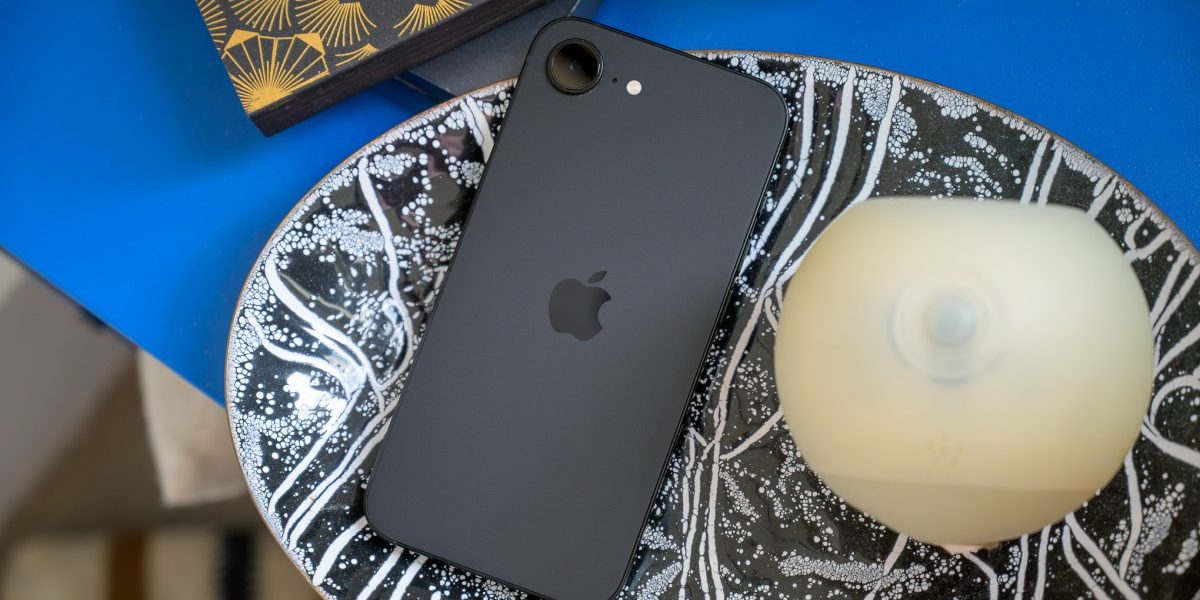
The US smartphone market is weird. Most of us buy our phones through some combination of installment plans, trade-in offers, and carrier deals, so answering the question “How much does this phone cost?” can sometimes require a little galaxy-brain math. There will be a 34 percent tariffs on Chinese goods on April 9th and things will be even more complicated. Will Apple, for instance, pass the extra cost of an iPhone right along to buyers? The market seems to think so. It’s likely why Apple’s shares are down almost 10 percent, the worst drop in about five years.
“I don’t think we see a real path to a meaningful US smartphone industry production hub,” says Schneemann. Apple does a lot of manufacturing in the US, but it is more limited than other companies. The network of component suppliers for the iPhone is a different beast. Even if Apple established supply chains, a workforce, and manufacturing facilities for the iPhone in the US, the costs would be prohibitively high, likely more than the impact of the tariffs. Because these tariffs are being carried out through an executive order, a new president could change them in four years.
And yet there’s still plenty of uncertainty around these tariffs, including whether they might get pushed back yet again. Like I said, it’s complicated.
Up First Briefing Trump New Tariffs: Are We All Angels, Kiese Laymon’s New Book, A Minecraft Movie, and Survival of the Thickest
Good morning. You’re reading the Up First newsletter. You’ll get it delivered to your inbox when you subscribe, and there’s a chance you’ll listen to the Up First radio show.
Scowl’s full-length album, Are We All Angels, will be released today. The singles that deviate from hardcore structure are made up of ’90s alt-rock, emo and pop-punk elements.
Kiese Laymon’s new book is a children’s book about three black boys from New York and Jackson, Miss. who form a deeper connection during a summer in the South. Listen to Laymon discuss the book and read excerpts with Morning Edition host Michel Martin.
The show stars a comedian as Mavis Beaumont, who is on the verge of getting a break when she splits from her boyfriend. She will have to rebuild in the series Survival of the Thickest.
🍿 Movies: A Minecraft Movie starring Jack Black and Jason Momoa is a goofy adventure full of blocky animals and magical macguffins. It hits theaters today alongside two other films: a gay rom-com and an anthology flick.
Source: How new tariffs will impact small retailers. And, key takeaways from Trump’s 7th week
How to Stay Safe in a Windy World When You’re Out of It: Donald Trump’s 7-Week White House Report on State Department Investigations
It’s not unusual for windy weather to come out of nowhere and leave little time to react. Powerful winds can cause problems, including damaging cars, causing power lines to fall and dumping trash on the ground. Dust storms can impact visibility. Here’s some expert advice on how drivers can stay safe when it is windy and what to do if caught in dangerous conditions.
Trump continues to make headlines with his foreign and domestic policy changes despite being in office for seven weeks. Here are four different things that happened this week, including Trump’s musings about running for a third term and Musk’s participation in the Wisconsin judicial race.
General Timothy Haugh, the Director of the National Security Agency and head of U.S. Cyber Command, has been fired, according to top Democrats on congressional intelligence committees, Sen. Mark Warner and Congressman Jim Himes. Several National Security Council staff members have also been fired. The New York Times and The Washington Post report that far-right activist Laura Loomer influenced the firings during a meeting with Trump. NPR hasn’t independently verified this information.