
The Case of the Delaware Memorial Bridge: Implications for the Public Safety of Key-Bridge Refits and for the Transport of Hazardous Materials
The NationalTransportation Safety Board will take a hard look at the regulations in place to see if there is better ways to protect the bridges. Public safety is thenumber one issue, according to Azizinamini.
The Key Bridge collapse will likely force some cities to reexamine their bridge safeguards. Last year, New Castle, Delaware, kicked off a $93 million project to install dolphins surrounding the piers of the Delaware Memorial Bridge. While the city took the initiative to proactively reinforce the bridge, federal agencies could soon force other cities to do the same.
Concrete islands surrounding the Key Bridge’s beams may not have been enough to reduce the effects of a cargo ship colliding with it. Khalid M. Mosalam says that he doesn’t think a retrofit of the bridge would be practical to prevent the disaster.
But larger ships also carry their own set of risks. The Ever Given ran aground in the canal and was trapped for almost a week. Ports have had to make adjustments to accommodate ships’ increased sizes. In 2017, the Panama Canal expansion project was completed to “meet the growing demand of maritime trade using larger vessels.” In 2019, the Bayonne Bridge connecting New York and New Jersey was raised 64 feet so ships could fit underneath.
Shipping companies have faced global demand for goods, which has led to the increase in the average size of cargo ships. The Organisation for Economic Co-operation and Development says 90 percent of traded goods travel by water, and that maritime trade volumes are expected to triple by the year 2050. The reason shipping companies have started opting for larger “mega-ships” is simple: the larger the ship, the more goods it can carry in a single trip from retailers like Amazon, Target, and Walmart.
Older bridges weren’t made to withstand collisions with cargo ships the size of Dali. Baltimore’s Key Bridge was finished in 1977, costing around $110 million to construct at the time. 11.3 million vehicles cross it every year, which is close to the busy Port of Baltimore. Vehicles carrying hazardous materials can only drive on the Key Bridge since they aren’t allowed inside nearby tunnels.
However, Schmucker notes that these new rules typically take a few years before they’re adopted. “It could easily have been into the 2000s before you actually saw a bridge designed for it,” Schmucker says. That can be a result of the lengthy process that we use for significant bridges. They are expensive… and they can be a challenge to integrate with the environment.”
The MV Dali Key Bridge Collapse and Its Costs in 2020: Is It Worth It? An Attorney General’s Perspective
“The 3-span continuous nature means that when the main span’s pier was destroyed by the ship, the two directly affected spans lost one of their primary supports,” Douglas Schmucker, a professor of civil and environmental engineering at the University of Utah, tells The Verge. “When the middle span collapsed, it essentially pulled the third span with it because it was integrally designed to function together, not in isolation.”
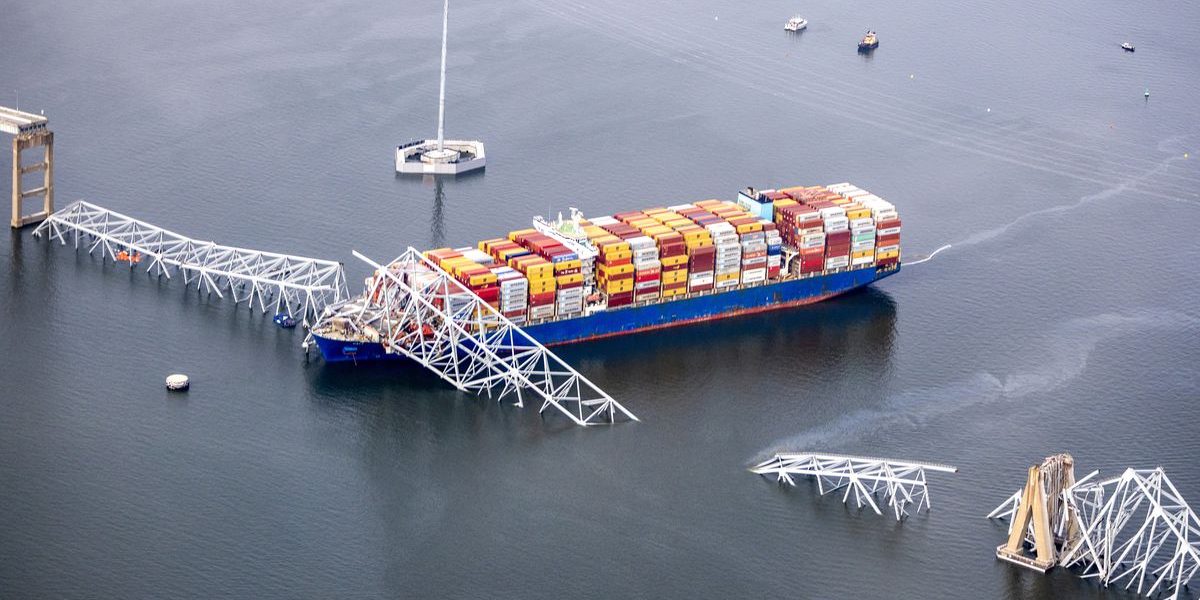
The Key Bridge was the second-longest continuous through bridge in the US behind the one in Oregon. But this week, the massive MV Dali cargo ship collided with the Key Bridge’s support column, causing a complete collapse that took place within seconds. Four construction workers are presumed to have died.
Emergency funds that don’t require Congressional approval may be used to cover some of the costs. It will be necessary for the White House to get lawmakers to sign off on more money. In a presidential year, it may be difficult for Republicans on Capitol Hill to sell that.
An professor from the University of Kentucky told Morning Edition that it would take about 600 million to replace 350 million. “I would imagine because it’s such a critical bridge, it will most likely be fast-tracked. So it will take probably about two to three years to rebuild.”
“I expect that any private party that could be found liable will be held accountable,” Buttigieg told NPR. “But the issue here is, we can’t wait for those liability processes to get settled and resolved to get to work and get this bridge back up.”
Pete Buttigieg, the transportation secretary, said in an interview with NPR that this is a down payment. We’re not certain what the total cost will be.
The assessment of the Baltimore River for a giant crane arrives in Baltimore, but leaders see a ‘daunting’ cleanup job ahead
It will be difficult to complete that assessment. Divers have to work carefully and methodically, Moore said, because the water around the wreckage is so dark and full of debris that they can only see a foot or two in front of them.
“We’ve got to complete the assessment process of the bridge, and the piece of the bridge that are within the water, before we can lift it”, he said.
The giant crane and other resources are still being developed by the authorities, Shannon Gilreath said.
Spellmon said that the first step was to remove the portion of the bridge that is draped across the front of the vessel. The shipping channel might initially open for one-way traffic, he said, before it could accommodate two vessels at once.
The shipping channel must be reopened as quickly as possible. But first, they will have to remove the ship and debris from the river.
The nearly 1,000-foot long cargo ship remains stuck in the river, where it’s pinned to the bottom by the wreckage of the bridge that is resting on the ship’s bow. Some of the containers on the ship were knocked out during the collision, and some were dangling from the edge of the ship.
Deputy Governor Wes Moore arrives in Baltimore, but leaders see a ‘daunting’ cleanup job ahead of the collapsed Francis Scott Key Bridge
“To go out there and see it up close, you realize just how daunting a task this is,” Maryland Governor Wes Moore said at a news conference near the harbor on Friday, with the enormous crane looming in the background. You know how hard the work is going to be.
Three days after a massive cargo ship smashed into a bridge, thousands of tons of concrete and steel are blocking the main shipping channel in the river.
Federal money is starting to flow to Maryland as authorities plan how to save the crippled ship, and return it to work. The effort will not be cheap, or quick, but it will be hard.
“We’re at least going to have to cut that portion of the bridge into four different members, and safely lifted off of the vessel, and move it out of our way so we can get to the remaining work,” Spellmon said.
The head of the U.S Army Corps of Engineers said that part of the bridge was up to 4,000 tons.
A massive floating crane capable of lifting 1,000 tons at once has arrived at the site of the collapsed Francis Scott Key Bridge as authorities scramble to reopen the main shipping channel to the port of Baltimore.
“It affects supply chains all over the country, in every state of the union,” said Congressman Kweisi Mfume, whose district includes parts of Baltimore, as well as Dundalk, Maryland and other communities that depended on the collapsed bridge. “We’ve got to move swiftly to clear the channel.”
Authorities say 56 containers on the ship carry hazardous materials of some kind. The 13 containers that were hit by the bridge strike had things like soap products, perfume and a kind of resin in them.
There is a visible sheen on the surface of the water, though Gilreath says that was likely caused by about 20 gallons of oil that leaked from damaged equipment on the front of the ship.
Source: A giant crane arrives in Baltimore, but leaders see a ‘daunting’ cleanup job ahead
Air monitoring by the Coast Guard: No harmful or flammable releases detected during the air monitoring performed by the U.S. Coast Guard (Italy), in a statement
No harmful or flammable releases have been detected during the air monitoring done by the Coast Guard, according to a statement.