Trade with the U.S. in the wake of Trump’s latest tariffs: China and its ties to the US and the WTO
Beijing says it has gone out of its way to help reduce the flow of Fentanyl into the U.S. After Trump announced his latest tariffs, China warned that they would damage prospects for future cooperation and vowed to launch a case against them in the WTO.
“[T]he underlying economic and political grievances between China and the U.S. run far deeper than those between the U.S. and its neighbours,” he said.
The tariffs on Mexico and Canada have been put on hold for at least a month after last minute negotiations led to both countries agreeing to boost border security.
Julian Evans-Pritchard, head of China economics at the research firm Capital Economics, said in a note the retaliatory measures were “fairly modest.” He estimated the targeted goods were worth around $20 billion, or 12% of China’s total imports from the US.
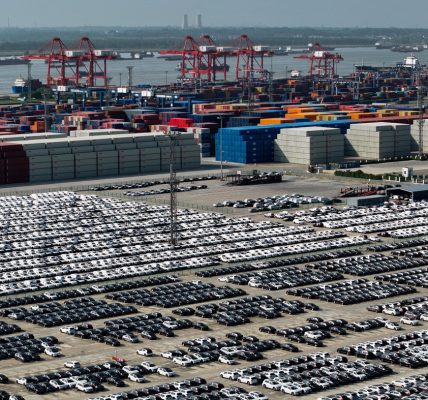
It’s possible that trade with those three countries could be stopped. President Trump has imposed a 10% tariff on China — leading the country to retaliate with tariffs of its own. Although he agreed to put on hold the tariffs, he could still impose them after 30 days.
China’s Commerce Ministry Announced Two U.S. Companies on “Unreliable Entity” List and a Joint Search for Global Trade, Economic and Trade Cooperation
China’s commerce ministry also put two U.S. firms – PVH Group and Illumina, Inc. – on its “unreliable entity” list, saying they violated market principles and adopted discriminatory measures against Chinese companies. Tommy Hilfiger and Calvin Klein are among the brands owned by PVH.
In addition, China’s market regulator announced an anti-monopoly investigation into Google. And the commerce ministry and customs administration jointly announced fresh export controls on a handful of rare metals, including tungsten, indium and molybdenum. Announcements about the Google investigation and export controls did not explicitly mention the U.S. tariffs.
Those include tariffs on American coal and natural gas as well as crude oil and farm equipment. The Chinese counter-tariffs are slated to take effect on Feb. 10.
The Chinese finance ministry said in a statement that the U.S. tariffs violate World Trade Organization rules and disrupt economic and trade cooperation between China and the US.
Gas prices remained flat at the announcement of the tariffs over the weekend. A spokesperson for AAA said it’s too soon to tell whether there will be long-term effects on prices at the pump.
Trump’s tariffs could impact you and your wallet: How the Midwest and Mountain West will be impacted by higher prices for imported foods and building materials
There is a chance that may well be. In the Midwest and Mountain West, “100% of imports going into those two areas come from Canada,” says Scott Lincicome, vice president of general economics and trade at the Cato Institute. American refineries can’t switch to the lighter oil produced in the United States because they are mostly set up to use the heavier oil from Canada.
Consumers end up paying for the tariffs on the basis of higher home prices, as the Chairman of the NAHB said in a statement.
The National Association of Home Builders warned that over 70% of the imports of two essential building materials, softwood lumber and gypsum (used in drywall), come from Canada and Mexico, respectively.
But U.S. reliance on Canadian lumber has declined in recent years due to a combination of fires, beetle infestation and tariffs, says Lincicome, which could mute some of the price effects. There’s a 15% tariffs on Canadian lumber.
Tariffs mean prices for those groceries and many more will rise — including for imported tomatoes, raspberries, bell peppers and strawberries, given that Mexico is the leading supplier of each of them.
There is a high degree of integration among the US, Mexico and Canada in carmaking. Parts go back and forth between the countries throughout the production process.
Source: Here’s how Trump’s tariffs could impact you and your wallet
The cost of production in the U.S. is too high, and a lot of American factories are going to be shut down by tariffs
It is winter when more of the produce eaten in the US comes from Mexico. Tomatoes are a crop that the U.S. produces a lot of in the summer but not so much in the winter. So your imported tomato would cost more too.
In 2021, Mexico provided almost two-thirds of U.S. vegetable imports and about half of U.S. fruit and tree nut imports, according to the U.S. Agriculture Department.
York said she bought an extra bag of avocados to put in the fridge and some frozen berries. “If you’re going to buy a car, maybe think about doing that,” she says.
But Lincicome says simply that there’s not much you can do. He says that buying American won’t help because American producers are going to raise their prices so much that they’ll match their competitors.
“We make the majority of our toilet paper here, but people went to buy it because they were afraid, so we stopped making it here,” says Lincicome. “If you start getting really nervous and start stockpiling goods and a lot of other people do that too, you can actually create high prices and shortages where there isn’t even a tariff effect. I wouldn’t recommend that.
“Incomes and returns to shareholders are lower in the U.S. economy since businesses don’t like having to pay higher costs,” says York. “It means they have less to hire and expand employment, or less to invest. Americans are hurt by the tariffs, no matter what channel the price impact takes.
For one thing, importers pay a tariff based on the cost price of the item, not the full retail price. And Apple might try to ramp up its production in other countries like India, or it could decide to eat the cost of the tariffs — especially since competitor Samsung produces many of its phones in South Korea or Vietnam and won’t feel the same blow.
The tariffs Trump imposed during his first term were more targeted. More Americans will feel the impact this time. Among the imports affected are a whole slew of consumer goods, including footwear, toys, video game consoles and electronics.
US businesses import a lot of components and equipment from China, as well as the machinery and equipment they use in their own production processes. So the cost of production in the U.S. will go up too.
The Tax Foundation found that if the tariffs are imposed it would result in an average tax increase for Americans of over 800 dollars a year.