
Google’s defense against the Department of Justice’s antitrust allegations in the last major tech monopoly case: The case of the Google search engine
The court battle between Google and the government is the first major tech monopoly case to make it to trial in decades and the first in the age of the modern internet. The last major case of this size was against Microsoft in 1998. In that case, the judge ruled in favor of the government, saying Microsoft violated antitrust laws.
Pichai is going to be one of at least 10 other witnesses. The trial is expected to last for at least a month. It’s a bench trial, so there’s no jury and the presiding judge, Judge Amit Mehta, will give the final ruling.
Google controls around 90% of the U.S. search engine market. The company is believed to argue that people don’t have to use the search feature just because it’s the default browser. Google says that with just a few clicks and swipes, people can easily switch to another browser — but they choose to stay.
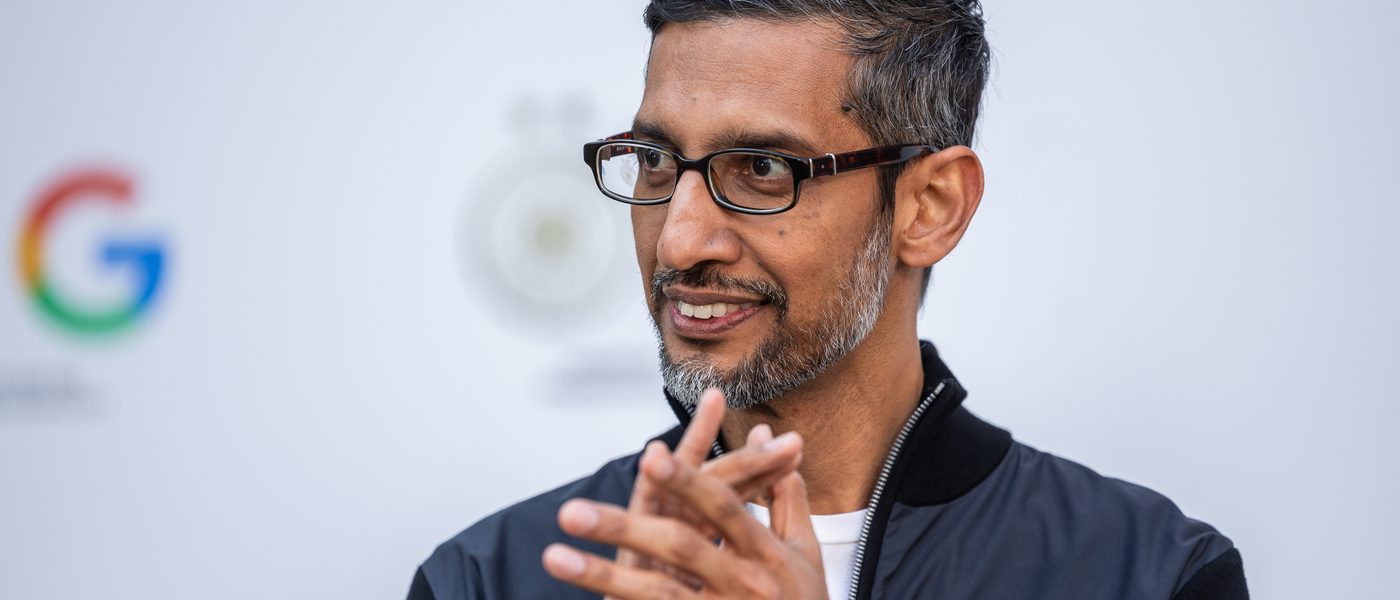
Pichai testified in DC District Court on Monday as part of Google’s defense against the Department of Justice’s antitrust allegations. The Apple /google search deal was once again a focal point of the day. Pichai said that he and Cook met about once a year to talk about the state of their deal, which makes Google the default search engine on Apple products and brings Apple many billions of dollars a year.
He worked on the search toolbar when he first joined the company. The team that built the Chrome browser was led by him.
Google began its defense last Thursday and is expected to continue to hit on this same idea over the next three weeks. And there are few people more qualified to talk about its search products than CEO Sundar Pichai.
“Microsoft has failed to invest, failed to innovate in a way comparable to Google, and many other areas which have nothing to do with scale,” he said.
“For more than a decade, google had a monopoly over the internet,” said the Justice Department’s lead lawyer. If they set the rules, it will always be their advantage.
It became so pervasive that The New York Times and other major news organizations filed a court motion imploring the judge to ensure the case was conducted in an open courtroom.
While some information about Google’s business dealings came out in court, a lot was presented behind closed doors. Cue testified for four hours, but more than half of that was closed to the public. Throughout the course of the trail, Google continually fought to seal documents and shutter proceedings in public court.
Executives from smaller search engines testified that the exclusive deals they had with Gmail effectively stopped them from gaining market share.
The open web does not mean there is not a good one, according to the testimony of the man. “The distribution advantage Google has today doesn’t go away.”
The witnesses were called by the Justice Department. They were joined by Microsoft CEO, Satya Nadella, who testified that he tried for years to convince Apple to switch its default browser to Microsoft’s Bing. Even a company as big as Microsoft can’t compete without being able to do that.
John Kwoka, a Northeastern University economics professor who studies antitrust, said the Microsoft case was the most talked about of the century at the time. We have a new case, a new potential landmark case, because that was the last century.
For the past six weeks, the Justice Department and dozens of top state prosecutors have tried to prove that Google illegally used its monopoly power to ensure its search engine remained on top.
In 2018, Pichai said in testimony, Apple was concerned about a decline in revenue growth from their rev-share deal. Apple received less revenue from its partnership than it was getting from the rest of the revenue, as executives complained. Google had a few suggestions about what might be causing the discrepancy. The list included Siri Suggestions, a newish Apple product that aimed to help users get where they were going faster for some queries rather than sending everything to Google. But Google also pointed out, according to notes shared after the meeting by partnerships executive Don Harrison, that “Google is not in control of the amount or type of traffic received by Safari; Apple is.”
That is when Pichai made his case. Harrison said that the fact that they do what they do and people trust them with what they are looking for was something that would make them consider building an app. Tim was listening but didn’t react to the fact that we had different strengths.
Pichai talked about the concept of attorney-client privilege and the legal response to the launch of Internet Explorer 7. It was the Apple deal that seemed to linger over everything.