
The 2020 California Supreme Court Decision Allows App-Based Companies to Treat Their Workers as Independent Contractors Despite the High Spending Case for Prop 22
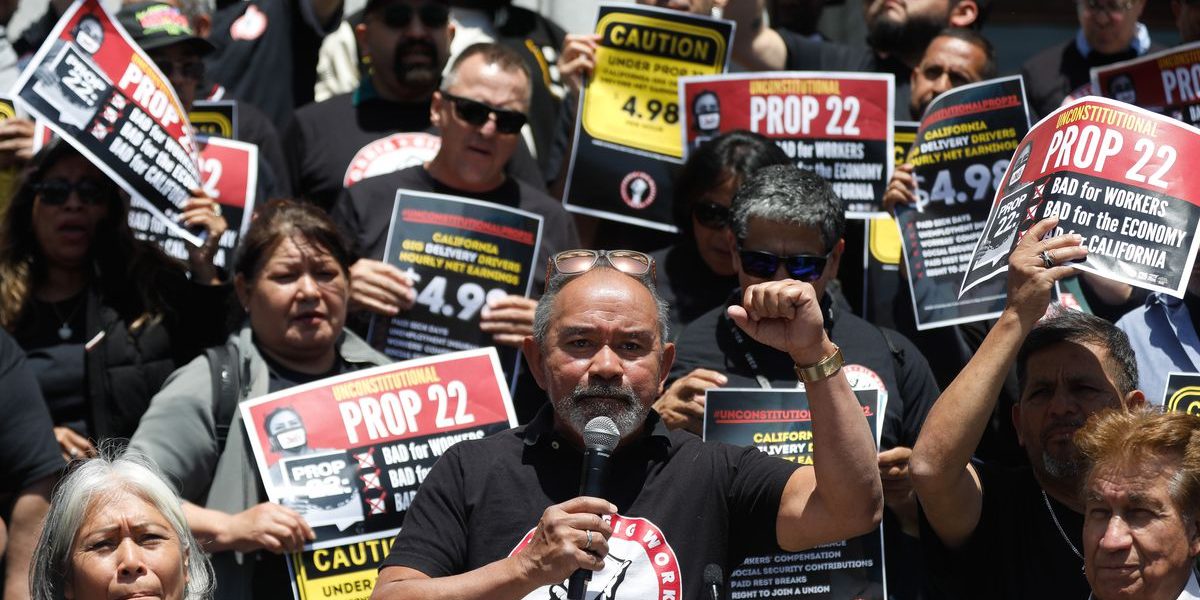
The question of whether those who drive for the companies should be treated as employees or contractors has spurred a yearslong legal battle in the state. In 2020, California voters approved Proposition 22, allowing app-based companies to continue to treat their workers as independent contractors. The vote reversed the court ruling, which found that companies that controlled many of their drivers working Conditions to treat them as contractors. The campaign for the ballot measure cost its advocates some $200 million, making it the highest spending campaign in state history.
Opponents of prop 22 are angry with the result. “We are deeply disappointed that the state Supreme Court has allowed tech corporations to buy their way out of basic labor laws despite Proposition 22’s inconsistencies with our state constitution,” Lorena Gonzalez, the president of the California Federation of Labor Unions, says in a statement posted online. These companies are forcing workers and the public to take risk while they make money.
The ballot measure for 2020 required the app-based companies to establish a wage floor, pay health care stipends for workers who drive enough hours and give drivers time to spend with passengers in the car.
“Today’s decision was supposed to bring justice, to confirm that even as workers who are managed by apps on our phone, by algorithms, by AI, that we are indeed workers with robot managers,” Nicole Moore, president of Rideshare Drivers United and a part-time driver in Los Angeles, said during a briefing with reporters following the decision. “And we deserve the same rights and benefits as all other workers in our state. But that did not happen today.” Moore called for a “creative pathway” to make sure that drivers are protected and paid fairly.
Some drivers expressed their satisfaction that app-based companies would maintain their flexibility. “I’m just so grateful right now,” said driver Stephanie Whitfield, who works in the Coachella Valley.
The ruling won’t affect the laws in other states, but it will affect policy in other places. Minnesota and Colorado both recently passed laws instituting better pay standards for app-based drivers, though neither resolved whether workers should be treated as contractors or employees. The Biden administration has taken aim at worker misclassification in the gig economy through new labor rules, though app-based companies say those rules don’t affect their businesses.